
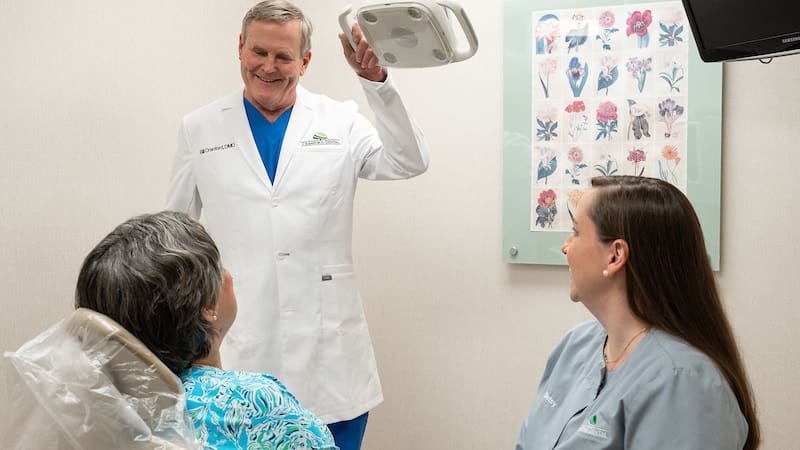
Gerodontics is the care and treatment of the dental problems of older adults. At Cranford Dental in Rock Hill, SC, we are concerned for the rapidly growing population aged 75 and older.
In fact, we love working with senior citizens—helping patients keep healthy teeth as they age. Thankfully, a large number of our patients are smiling big as they pass through their 80s and 90s.
Obviously, each person has a unique experience with getting older. Thus there is no set geriatric dental care plan that works for all. Certainly, if patients understand how ageing affects oral health, they can adjust dental care to keep teeth and gums strong and healthy.
In 2023, patients with good dental care habits can expect to keep their natural teeth for a lifetime.
Listen to Dr. Bill Cranford on Dental Care for the Elderly (2 minutes)
Below we discuss dental care for senior patients, with advice and warnings that will help you have healthy teeth as you get older.
Ageing and Dental Complications
Ageing often makes dental care more complicated.
Getting older is not the main cause of failing oral health. Rather the general health consequences of ageing lead to problems with teeth and gums.

This patient’s teeth decayed rapidly. As he developed dry mouth, he used sugary candies which led to decay and loss of tooth structure.
Medications
The most common side effect of prescribed meds is dry mouth, or lack of salivary flow. Cancer treatments (chemotherapy and radiation) and certain diseases also cause dry mouth.
For help with dry mouth, read our blog post on Xerostomia.
Gum problems
Problems related to ageing often lead to gum disease, which is a major cause of teeth loss in older adults.
Plaque left on teeth, use of tobacco products, poor diets, and diseases such as cancer and diabetes can hasten gum disease. Also, dentures or bridges that do not fit correctly may cause inflammation of the gums.
Finally, our gums recede as we age. This exposes the roots to acids in the mouth, which leads to eventual decay and damage to the tooth.
Medical Conditions
Disease and medical conditions related to getting older make it harder for us to care for our teeth. For example, Arthritis in the hands or diseases that impact our mental capacity make it hard for us to maintain good dental health.
In addition, anxiety and mental health conditions may take away the motivation to care for our teeth.
Oral Health/General Health Connection
Generally, oral health reflects good overall health for the elderly.
And conversely, a decline in a patient’s care for his teeth is often an early sign of mental or physical health problems.
In addition, taking a step towards improving teeth and gums is a good first step towards better general or mental health.
Understanding the many connections between dental health and general health helps dentists guide older patients towards taking good care of their teeth.
Dental Health Plan for Older Patients
Using electric toothbrush and water jet will help elderly patients keep mouth healthy. And they are compact and easy to use for most people.
This blog post is for patients who are beginning to need help with planning for health care (usually 75-80 years old). If you are 50-70, read our advice for teeth and retirement.
The steps below will help you avoid many of the teeth and gum problems that some elderly people experience.
Follow Geriatric Dental Care Checklist
- Regular or more frequent preventive visits until dry mouth is controlled
- Daily at home fortified fluoride applications as prescribed
- Water jet/Water Pik usage 2 times per day
- Electric or sonic toothbrush 2 time per day
- Reduce dependence on candy, cough drops, breath mints
- Substitute sugar free gum to make saliva flow.
- Rinse frequently with water and drink water throughout the day.
- Water at bedside for night time dryness
- Take care of new dental decay quickly before it expands.
- Be proactive about addressing dental concerns.
Consult with both Dentist and Primary Care Physician
Review your general health and medications with both your dentist and physician. What health conditions may lead to dental health problems?
Are there medications that cause “cotton mouth” that can be changed to meds with less side effects? Or do cancer or diabetes treatments cause problems with teeth and gums? For sure, consult with your dentist about a specific care plan before starting radiation.
Your dentist will help you strategize ways to keep your teeth healthy based on your general health specifics.
The days when all grandmothers had “false teeth” are in the past. I am glad that I can assure patients that they can keep their natural teeth. This helps so much with overall good health.
Dr. Bill Cranford, Rock Hill, South Carolina
Warnings and Red Flags
Visit your dentist if you find yourself dealing with changes in your mouth, teeth, or gums.
Dry Mouth-Beware
50% of the U.S. Population over 65 years old is on 4 or more medications. The most common side effect of prescribed meds is dry mouth, or Xerostomia.
The most common way patients relieve dry mouth is by sucking on hard sugar candies such as peppermints, lifesavers, caramels, cough drops. Then sugar coats your teeth all day, leading to rapidly progressing cavities.
And these cavities usually cause no pain until they are large, making it difficult and expensive to save the teeth.
Sadly, many seniors lose teeth from the medicine-dry mouth-sugar candy relief-cavity cycle.
Warning: Erosion and decay happen quickly with when you combine dry mouth and sugar from candy or mints.
Bleeding or Inflamed Gums
Remember that healthy gums do not bleed and are not puffy. Please visit your dentist right away if you see these warning signs.
Change in Dental Habits
Talk to your physician or dentist if you lose the desire to keep your teeth brushed and feeling clean. This may be a sign of depression or a physical health condition.
Medicines & Dental Problems
Be aware of the medicines that cause problems with teeth and dental treatments.
Bisphosphorates
[Osteoporosis inhibitor, bone strengthening drugs such as Boniva]
Physicians prescribe these medications to strengthen the long bones of the body.
Unfortunately, a side affect for some people is extremely slow healing when the dentist extracts a tooth.
In fact, healing time for these patients is often several months instead of a few days.
Anticougulants
[Blood thinners such as aspirin, coumadin (Warfarin), Eliquis, Xarelto, Pradaxa]
Patients take anticougulants to prevent blood clots and decrease risk of stroke, cerebral vascular accidents, and hear attacks.
These drugs complicate all surgical procedures, including dental extractions. After tooth removal, clotting may be very slow and difficult.
If you take anticoagulants, your dentist will consult with your primary or cardiology physician to determine if you should reduce or halt dosage prior to dental surgery.
Medical Concerns and Dentistry
The following medical conditions are more common in the ageing population. Your dentist will help you develop a plan to protect your dental health as you deal with these illnesses.
Heart Disease
Your dentist will evaluate problems with blood pressure, heart rate, arrhythmias, and related conditions prior to dental treatment.
Arthritis
Often joint pain restricts a patient’s ability to open wide for dental therapies. And painful, cramped fingers and hands make home care of the teeth difficult.
Thus it is important to see a dental team with experience in dealing with these challenges.
Our hygienists are terrific coaches in teaching patients new ways to keep teeth clean at home.
Sjogren’s Syndrome
Dry mouth is a primary indicator of Sjogren’s.
At Cranford Dental, we are experienced in helping patients navigate this annoying symptom through new habits and medications.
Diabetes
Diabetic patients experience reduced vascularization, thus slower healing. Unfortunately, this can result in problems with extractions and poorer integration of dental implants due to reduced blood flow in small blood vessels.
In addition, dry mouth and an increased decay rate often go along with diabetes.
For these reasons, we encourage patients with diabetes to be diligent with dental visits and home dental care.
Anxiety Disorder
Talk to your dentist if anxiety is interfering with your dental health in any way.
After working with countless patients with advancing age, we know that steps towards improving teeth and gums result in feeling better overall.
Heart Valve Replacement & Heart Surgery
Both artificial or porcine surgical valve replacement must be considered before dental treatment. Many cardiac surgeons recommend a window of post surgical time with no dental treatment.
Also, doctors recommend antibiotic pre-dosing for certain dental procedures.
We will assist you in coordinating dental treatment with your cardiologist or surgeon.
Joint Replacement
In past decades, dentists pre-dosed orthopedic prosthetic joint patients with antibiotics.
But recent studies show no difference in joint rejection with or without antibiotic pre-dosing.
Currently, we look to the orthopedist to prescribe antibiotics if needed.
Cancer-Radiation and Chemotherapy
The harshest dental side affect of cancer treatments are extreme dry mouth and nausea and vomiting which accompany chemo. This leads to etching and eroding of teeth enamel.
Also, radiation of the head and neck region may zap major salivary glands, reducing salivary flow. This results in mouth discomfort and deterioration of teeth.
Thankfully, our patients who consult with us before beginning cancer treatment avoid damage to teeth and gums from treatment.
Caregivers and Oral Health
Providing dental care for another can be challenging.
Caregivers should develop a daily oral health routine and stick with it. Twice each day, help the person brush with a soft toothbrush and fluoride toothpaste.
For more advice, read Oral Health Care tips for Caregivers (from the American Dental Association).
If Bad Things Happen—Fix your Teeth
With modern dentistry, we plan on your keeping your teeth for a lifetime. But bad things can happen to teeth. Good news is that losing or breaking them don’t stop you from living your best life.
Even more good news is that with modern dentistry teeth can be replaced or restored.
Senior Citizens and Cranford Dental
At our office we have enjoyed working with countless patients as they passed through later years.
In fact, seeing happy, healthy elderly patients who take good care of their dental health is one of the best parts of practicing dentistry in Rock Hill.
It is rewarding to guide people towards good dental health in every stage of life. We especially enjoy seeing patients we have known for many years enjoy healthy teeth and gums as they age.
Dr. Bill Cranford
We would be glad to provide guidance or answer any questions you have about dental care and ageing. Contact Cranford Dental in Rock Hill SC or call 803-324-7670 for an appointment.
We love to welcome new patients of all ages to our office.
Leave a Reply